How many people does a kilo of cake feed?
Half the world quotes cake by the kilo and the other half by the inch. If you are in the first group, the diameter charts everyone links to are the wrong tool.
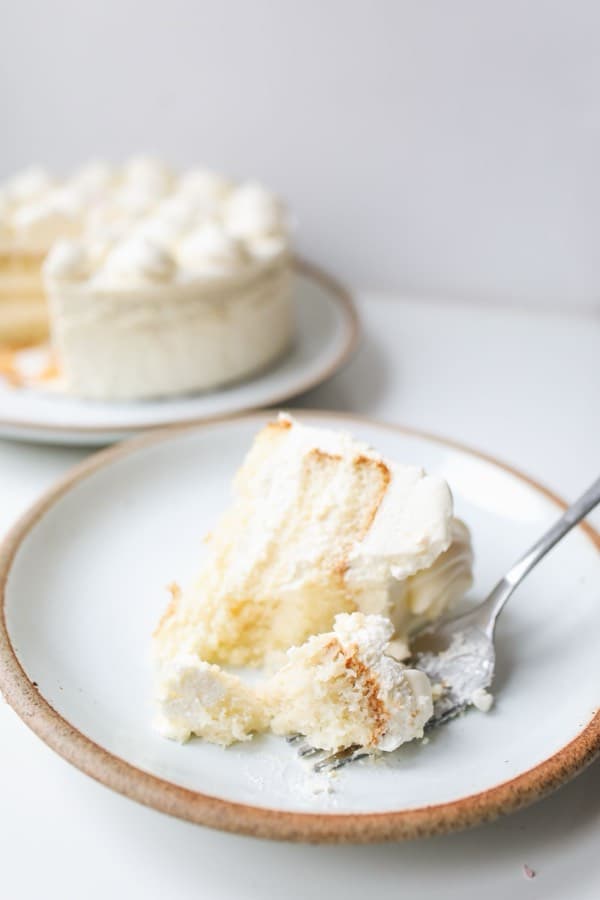
Weight-based portioning, in one number
A kilogram of cake gives about eight servings. That is the working figure across most of India and much of South and South-East Asia, and it corresponds to a slice of roughly 125 g — a proper piece of cake on a plate with a fork, not a wedding sliver.
The arithmetic is deliberately simple: multiply the weight of the cake in kilos by your servings-per-kilo figure, and round up. A 2 kg cake at 8 per kilo is 16 servings. A 500 g cake is four.
The reason this survives as a standard is that it needs no chart. It works for any shape, any height, any tier count — none of which is true of a diameter table, which quietly assumes a round cake of a particular height.
Pick the figure that matches your slice
Eight per kilo is the common default, but it is a choice, not a law. What matters is that the number you quote matches the slice you actually cut.
| Servings per kg | Slice weight | Typical use |
|---|---|---|
| 6 | ~167 g | Generous party portions, dessert-sized |
| 8 | ~125 g | The common default — a standard plated slice |
| 10 | ~100 g | Smaller portions, tea-time or large gatherings |
| 12 | ~83 g | Finger-sized, closer to a wedding portion |
Quoting by the kilo
Weight-based pricing has one large advantage and one large trap. The advantage is that it scales honestly with the ingredients — a heavier cake costs more to make and costs more to buy, with no argument.
The trap is that it takes no account of labour. Two 2 kg cakes can be the same weight and a day apart in work: one smooth-iced with a ribbon, the other covered in hand-made sugar flowers. Price purely per kilo and the second one loses you money, every time.
The usual fix is a per-kilo base rate for the cake itself plus separate line items for the decoration work. That keeps the simplicity customers like while protecting the hours that actually make the difference.
Converting between the two systems
If a client sends you a diameter and you work in kilos, you need a bridge. Estimate the weight of the tier from its size, then apply your per-kilo figure. An 8-inch round, four inches tall, comes out around 2.7 kg finished — call it 21 servings at 8 per kilo.
That will not exactly match the number a Wilton-style chart gives for the same tier, and it should not: those charts assume a much smaller wedding portion. The two systems are describing different slices, not disagreeing about the same one.
Try it without signing up
Pick a cake, change its colours and finish, and watch the price move.
Loads a 3D viewport · works best on desktop
Frequently asked
How many people does a 1 kg cake serve?
About eight, at the common standard of eight servings per kilo — roughly 125 g each. Cut smaller tea-sized portions and the same kilo will stretch to ten or twelve.
How many people does a half kg cake serve?
Four at the standard eight-per-kilo rate. Half-kilo cakes are usually bought for two to four people, so that lines up with how they are actually eaten.
Should the cake board be included when pricing per kilo?
No. Weigh the cake alone. A large drum board can be close to 400 g, and including it means charging cake prices for cardboard.
Why does a serving chart give a different number to per-kilo?
Because they assume different slice sizes. Diameter charts are usually built around small wedding portions; per-kilo standards around a plated dessert slice. Neither is wrong — just make sure the one you quote matches the one you cut.
Keep reading
Cake Serving Chart & Size Guide
Cake serving charts for round, square and sheet cakes, with party and wedding slice sizes side by side — plus how many each tier size actually feeds.
How Much Does a Cake Weigh?
Finished cake weights by tier size, built up from sponge, filling and covering, plus the densities behind them and why the board is excluded.
How Much to Charge for a Cake
How to charge for a cake using a simple, defensible formula: cost plus labour plus margin, with worked examples and awkward quotes covered.
Start designing and pricing your cakes
Sign in with Google or email and start designing — no waitlist, nothing to install.