How much fondant to cover a cake
Fondant is sold in 500g and 1kg packs, so the real question is never how many grams. It is whether one pack will do, and the honest answer is usually no.
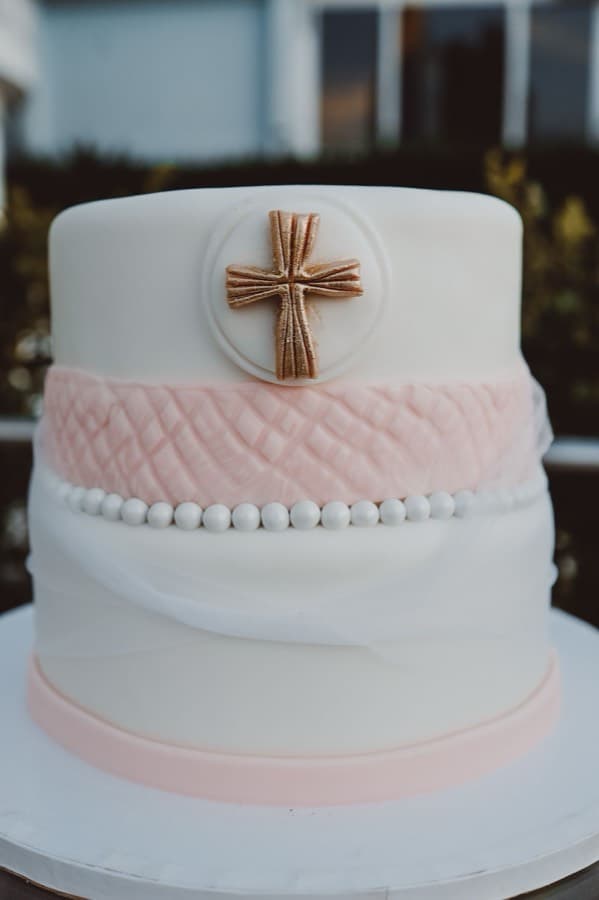
You roll out far more than you put on
A fondant covering ends up around 3mm thick on the finished cake. But you cannot roll a sheet 3mm thick and lift it — it tears under its own weight before it reaches the cake, and it will not stretch over the top edge without splitting.
So you roll thicker, drape, smooth, and cut away the skirt at the base. Measured against what actually stays on the cake, the sheet you roll is about 58% more fondant. That overhead is the same at every size, which is why it disappears from most coverage charts and then reappears as a second trip to the shop.
The figures below are what you need to roll, not what ends up on the cake. They are the number that matters when you are buying.
Fondant by tier size, in packs
| Tier | Needed | Packs | Left over |
|---|---|---|---|
| 6″ × 4″ | 477 g | 1 × 500 g | 23 g |
| 6″ × 6″ | 650 g | 2 × 500 g | 350 g |
| 8″ × 4″ | 693 g | 2 × 500 g | 307 g |
| 8″ × 6″ | 924 g | 2 × 500 g | 76 g |
| 10″ × 4″ | 939 g | 2 × 500 g | 61 g |
| 10″ × 6″ | 1,227 g | 3 × 500 g | 273 g |
| 12″ × 4″ | 1,213 g | 3 × 500 g | 287 g |
| 12″ × 6″ | 1,560 g | 4 × 500 g | 440 g |
| 14″ × 4″ | 1,516 g | 4 × 500 g | 484 g |
| 14″ × 6″ | 1,921 g | 4 × 500 g | 79 g |
Why this disagrees with the chart on the box
Published coverage charts tend to sit a little below these numbers, because they assume an efficient roll with minimal waste and often a slightly thinner finish. The 8-inch figure here — 693 g — lands within a couple of percent of the widely quoted 680 g, which is reassuring: two different methods arriving at nearly the same answer.
Where the charts get optimistic is the larger sizes, where the skirt you trim away grows faster than the cake does. At 14 inches you are cutting off and rerolling a genuinely significant amount, and rerolled fondant is never quite as good.
What pushes it up
- Dark or strong colours. Kneading in colour dries the paste, and dry paste cracks, which means re-rolling and losing some.
- Sharp edges. A sharp-edged finish uses more than a soft round edge, because you are effectively covering twice at the top rim and trimming back.
- Square tiers. The corners take more than the geometry suggests — a square tier of the same width as a round one needs noticeably more, and the corners are where tears happen.
- Humidity. In a humid kitchen fondant stays soft and stretches thin, which sounds helpful but usually means it slumps and you start again.
Try it without signing up
Pick a cake, change its colours and finish, and watch the price move.
Loads a 3D viewport · works best on desktop
Frequently asked
How much fondant do I need for an 8 inch cake?
Around 693 g for a 4-inch-tall 8-inch round, so two 500 g packs. A taller 6-inch-high tier of the same diameter needs about 924 g — still two packs, but with very little to spare.
Why does fondant run out when the chart said I had enough?
Almost always because the chart quoted what ends up on the cake rather than what you have to roll. Rolling at a workable thickness and trimming the skirt away means handling roughly 58% more than the finished covering weighs.
Can I reuse the fondant I trim off?
For a second cake or for decorations, usually yes. For the covering of the same cake, be careful — rerolled fondant has picked up icing sugar and lost moisture, so it is more likely to crack at the edges where you least want it to.
Does a square cake need more fondant than a round one?
Yes, and by more than the difference in surface area suggests. Corners need extra to drape and smooth without tearing, and they are where you will lose a sheet if you are short.
Keep reading
How Much Buttercream to Cover a Cake
Buttercream quantities by tier size, with coating and filling worked out separately — so you can weigh out one batch instead of guessing and making two.
How Much Does a Cake Weigh?
Finished cake weights by tier size, built up from sponge, filling and covering, plus the densities behind them and why the board is excluded.
Cake Costing Guide for Bakers
How to work out ingredient, labour and overhead costs per cake, so your prices are built on real numbers instead of guesswork.
Start designing and pricing your cakes
Sign in with Google or email and start designing — no waitlist, nothing to install.